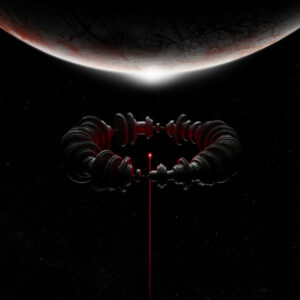
“The WOW! Signal” is the tenth studio album by British band Muse, released on June 26, 2026, on Warner Records. It is the band’s first album since “Will of the People” (2022) and, at the same time, a noticeable attempt to return to the massive, guitar-driven, and progressive formula that made Muse one of the most famous rock bands of the 2000s. The album lasts around 45 minutes.
Concept and Title
The title “The WOW! Signal” refers to the famous “Wow! signal” — a mysterious radio signal detected in 1977 by the Ohio State University’s Big Ear radio telescope. The signal lasted approximately 72 seconds, was never repeated, and for decades remained one of the most famous potential pieces of evidence of an enigmatic cosmic phenomenon.
This theme aligns perfectly with Matt Bellamy’s long-standing fascination with space, science fiction, conspiracy theories, and humanity’s place in the universe. However, on the new record, the space motif often serves as a metaphor for human relationships, loneliness, and loss.


Return to Classic Muse
Following the mixed reception of “Simulation Theory” (2018) and “Will of the People” (2022), the band consciously drew elements from their own past this time around.
Echoes of “Black Holes and Revelations”, “Origin of Symmetry”, and “The Resistance” are especially prominent in the music: heavy guitar riffs, Bellamy’s falsetto, dramatic synthesizers, orchestral arrangements, and grand climaxes are once again at the center of the compositions.
Yet, this is not a literal trip back to the 2000s. Muse incorporate French house, disco, electronic rock, prog metal, and even elements of classical music. The Guardian particularly notes the influence of Daft Punk’s “Discovery” on select tracks.
Key Tracks
- “The Dark Forest” — A grand opening track that immediately demonstrates the new approach. Choir, orchestra, electronic bass, progressive guitar parts, and almost cinematic storytelling all appear simultaneously. It is one of the most “typical Muse” tracks on the album—in both a good and bad way.
- “Cryogen” — One of the most obvious nods to classic Muse. Fuzz guitar and song structure recall the “Origin of Symmetry” / “Absolution” era, but the track takes on a more modern metal edge. It is frequently cited by listeners as one of the best tracks on the album.
- “Unravelling” — A more personal piece tied to themes of alienation, distrust, and the breakdown of relationships. A powerful chorus and Bellamy’s dramatic vocal delivery make it one of the record’s most emotional moments.
- “Nightshift Superstar” — One of the most unexpected songs. Muse utilize French disco/electro-funk, layering characteristic guitar solos and massive rock production over top. For some listeners, it stands out as one of the freshest experiments; others consider it a bit forced.
- “Hush” — A collaboration with Ellie Goulding. The song blends pop melodies with a heavier electronic-rock sound. Its inclusion might seem surprising to longtime Muse fans, yet it remains recognizable thanks to its dramatic chorus and guitar work.
- “Shimmering Scars” — One of the calmest tracks. Beneath its grand cosmic shell lies a piano-driven ballad about pain and loss. Here, the album’s space imagery transforms most transparently into a metaphor for personal tragedy.
- “Space Debris” — The closing track, which defies the Muse tradition of ending albums with a massive rock epic. It is a quiet, emotional piece where Bellamy uses space imagery to detail the breakdown of a relationship. While some find this ending overly restrained, others view it as one of the album’s strongest moments.
Personal Aspect
Despite its sci-fi and cosmic outer shell, “The WOW! Signal” turned out to be one of Bellamy’s most personal albums.
Part of the material was written against the backdrop of major changes in his personal life and the end of his marriage. Because of this, themes of cosmic isolation, lost connections, coldness, and the search for another world take on a double meaning. Listeners note that knowing this context provides a deeper understanding of the album’s lyrics.
Critical Reception
Professional press reaction has been generally positive, though the album clearly divided critics.
On Metacritic, “The WOW! Signal” received a score of 66/100 based on 13 professional reviews: 9 positive, 3 mixed, and 1 negative.
NME received the album with high praise, calling it the best Muse album in 20 years and noting a return to their early musical energy. Kerrang! similarly commended the band’s scale, ambition, and unabashed theatricality.
AllMusic considers “The WOW! Signal” to be Muse’s most cohesive record since “Black Holes and Revelations” / “The Resistance”, highlighting that the band does not simply copy past hits, but uses familiar elements to construct a more unified project.
Conversely, Pitchfork was far more critical, awarding it a 4.5/10. Their primary critique is that Muse attempt to simultaneously be grand, progressive, pop-oriented, and experimental, leaving several compositions feeling overcrowded.

Overall Summary
“The WOW! Signal” stands as Muse’s most convincing effort in recent years to return to their core musical identity without giving up on experimentation. The band sounds grand, theatrical, and slightly absurd once more—complete with orchestras, choirs, progressive riffs, electronics, and sci-fi themes.
However, the key distinction from recent releases is that beneath the grandeur lies a more human and personal story. Space here is not just about aliens and enigmatic signals—it serves as a metaphor for distance between people.
As a result, “The WOW! Signal” can be viewed as a return to form without a literal step backward. For some, it is the band’s finest work in 15–20 years; for others, another example of Muse over-embellishing solid ideas with excessive pomp. Even hesitant critics agree: there are moments on this record where the band’s old creative spark truly reignites.
Who Might Enjoy It
Fans of Muse from the “Origin of Symmetry” / “Absolution” / “Black Holes and Revelations” eras, as well as followers of Queen, Radiohead, Royal Blood, Depeche Mode, Placebo, Nothing But Thieves, and progressive alternative rock. It is especially worth checking out for those who appreciate grand rock with symphonic elements, electronics, a sci-fi atmosphere, and dramatic vocals.