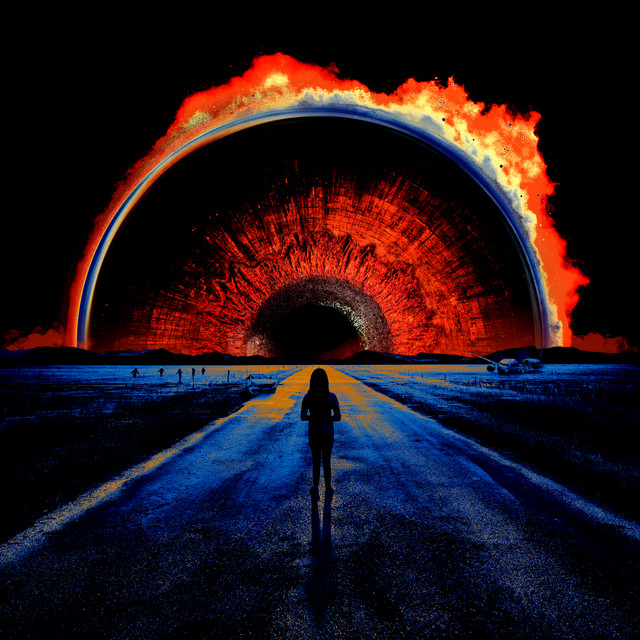
“The Singularity: Ekleipsis” is the second album in the ambitious symphonic rock/metal project by composer Bear McCreary, renowned for his work on The Walking Dead, Battlestar Galactica, God of War, and The Lord of the Rings: The Rings of Power. The album was released on July 31, 2026, via Sparks & Shadows Records and features 15 tracks.
Concept and Creation
While the first installment, “The Singularity” (2024), was a massive double concept album—which McCreary described almost as a musical “explosion” of all his ideas—”Ekleipsis” is a significantly more focused effort. The title originates from an Ancient Greek word associated with the meanings of “abandonment” / “forsaking”, with central themes revolving around disappointment, struggle, perseverance, and finding one’s place in the world.
This time, McCreary wrote about twice as much material as ended up on the album, keeping only 15 tracks. According to him, this made “Ekleipsis” a far more concentrated experience compared to the first album. His brother Brendan McCreary plays a key role, performing vocals on roughly half of the songs.
At the same time, “Ekleipsis” is not as rigidly tied to a narrative plot as the first “The Singularity“. McCreary explains that this time he did not plan to create another concept album, although the new songs remain part of the exact same creative universe.
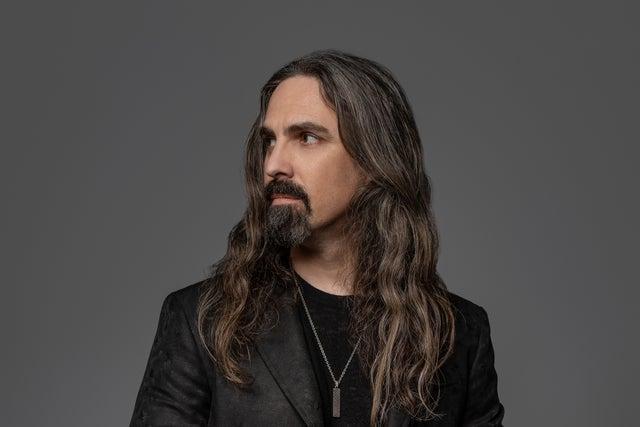
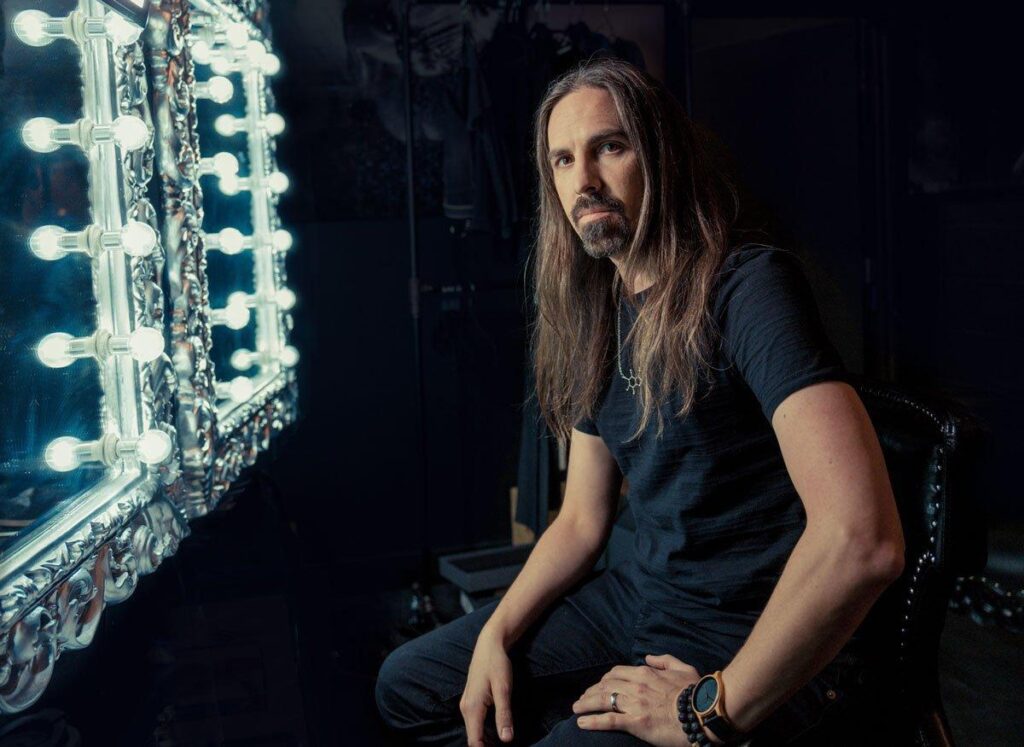
Bear McCreary
Bear McCreary is an American composer, conductor, and musician working primarily in film, television, and video game music. Born on February 17, 1979, he studied composition and recording arts at the Thornton School of Music at the University of Southern California. The legendary film composer Elmer Bernstein played a pivotal role in his professional growth as his mentor.
McCreary gained widespread acclaim for his score to Battlestar Galactica (2004), after which he went on to work on major projects such as The Walking Dead, Outlander, Foundation, The Lord of the Rings: The Rings of Power, as well as the video games God of War and God of War Ragnarök. For his work on God of War, he earned BAFTA and D.I.C.E. Awards, along with a Grammy nomination.
McCreary’s hallmark as a composer is the fusion of classical orchestral music with ethnic instruments, electronics, and rock/metal elements. His work on Battlestar Galactica served as an essential showcase of how unconventional the use of an orchestra, percussion, and world music traditions could be in a modern sci-fi soundtrack.
McCreary began working with rock music on a grander scale through “The Singularity“—his personal symphonic rock/metal project. The first album debuted in 2024, followed by “The Singularity: Ekleipsis” in 2026. In doing so, McCreary essentially transferred his film scoring expertise into rock: orchestral dramaturgy, choirs, complex thematic motifs, and cinematic composition structures remain the bedrock of his music.
Interestingly, McCreary himself does not primarily view himself as a rock musician. In his words, The Singularity became an outlet for musical ideas he had accumulated over roughly 20 years of working on other people’s projects.
Thus, listening to “The Singularity: Ekleipsis” is intriguing not just as another symphonic metal album, but as an attempt by one of today’s leading film composers to translate his cinematic mindset into the realm of rock music. This largely explains the grand scale of the orchestrations and the extraordinary lineup of guest musicians—ranging from Slash, Steve Vai, and Tim Henson to Joe Duplantier, Alissa White-Gluz, and Stewart Copeland.
Star Guests
The main feature of the project is the incredible number of featured musicians. On Ekleipsis, you can hear:
- Joe Duplantier — Gojira
- Alissa White-Gluz — Arch Enemy
- Patrick Stump — Fall Out Boy
- Claudio Sanchez — Coheed and Cambria
- Tim Henson — Polyphia
- Steve Vai
- Guthrie Govan
- Jens Kidman — Meshuggah
- Slash and Duff McKagan — Guns N’ Roses
- Chad Smith — Red Hot Chili Peppers
- Stewart Copeland — The Police
- Raya Yarbrough
- The Mystery of the Bulgarian Voices
However, these guest musicians aren’t merely there for “star cameos.” McCreary tailors each composition to fit the individual style of the specific performer. For instance, “Blueshift” was written with the guitar skillsets of Steve Vai and Tim Henson in mind, while on the first album’s “The End of Tomorrow”, he specifically left room for Slash’s signature melodic solo style.
Key Tracks
- “Our Kingdom“, featuring Alissa White-Gluz, opens the vocal portion of the album following “Overture II”. Her extreme vocal style contrasts sharply with McCreary’s symphonic foundation, producing one of the heaviest metal moments on the record.
- “The Chandelier“ with Patrick Stump showcases a completely different side of the project, leaning heavier into alternative rock and melodic vocals. The involvement of the Fall Out Boy frontman allows McCreary to step away from traditional metal aesthetics.
- The most notable single was “Black Box“, featuring Joe Duplantier and The Mystery of the Bulgarian Voices. The track combines 90s alternative rock, progressive metal, symphonic elements, and Eastern European folklore. McCreary himself cites it as the track that best encapsulates the scale of “Ekleipsis“.
- “Sweet Misery“ brings together Claudio Sanchez and Tim Henson. It represents one of the most explicit intersections of progressive rock and modern metal, where Sanchez’s vocal theatricality meets Henson’s technical guitar flair.
- “Blueshift“ is a display of guitar virtuosity. Featuring both Steve Vai and Tim Henson, with vocals provided by Brendan McCreary, the track stands out for how McCreary translates cinematic thinking into an instrumental rock/metal format.
- “Cool Kids“ features the album’s most star-studded lineup: Slash, Duff McKagan, Chad Smith, and Brendan McCreary. It functions almost as a mini-supergroup within the album, built around a classic hard rock sound.
- “The Elephant’s Foot“, featuring Jens Kidman, is one of the heaviest tracks on the record. The signature vocals of the Meshuggah frontman push the composition closest to modern progressive metal.
Cinematic Mindset
The primary distinction between “Ekleipsis” and a typical metal album lies in McCreary thinking like a soundtrack composer. Orchestral layers, choir, electronics, dramatic transitions, and thematic motifs work in unison with guitars and drums.
This is a logical evolution of his career path: McCreary first developed as a film, TV, and video game composer before translating those techniques into his own rock music. That is why he refers to “The Singularity” as a symphonic rock project rather than simply a metal band.
Audience Reception
The positive reception stems primarily from the sheer scale of the project, the unique blend of film scoring and metal, and the caliber of the guest musicians. At the same time, the star lineup can be a double-edged sword for some listeners: certain reviews suggest that individual tracks lean too heavily into imitating the guest artists’ usual style rather than building a completely distinct new sound.
What Worked
- Monumental Sound Design and Hollywood Scale: Music reviewers unanimously highlight the top-tier mixing and production. The combination of a heavy metal foundation with a live symphonic orchestra sounds seamless, without one element overpowering the other.
- A Virtuosic Balance Between Metal and Film Score: Fans of film music appreciated how Bear McCreary translated his distinct compositional style (God of War, Rings of Power) into progressive and symphonic metal.
- Quality of Guest Appearances: Listeners praise the choice of vocalists and guest guitarists, each of whom integrated naturally into the dark concept of “Ekleipsis” without shifting all attention solely onto themselves.
- A Darker, Grittier Atmosphere: Compared to the first chapter (2024), “Ekleipsis” received praise from heavy genre fans for its significantly darker tone, tighter guitar riffs, and deep cosmic-apocalyptic aesthetic.
What Received Criticism or Mixed Reviews
- Density / Complexity (Overwhelming): For some casual listeners, the album felt overly dense with details, shifting tempos, and orchestral layering. In their view, the record demands several attentive listens and can be exhausting during casual playback.
- Derivative of the First Part: A few reviewers pointed out that the album operates on the same structural templates as the first chapter of “The Singularity“, making this release more of an iteration on familiar ideas rather than a radically new musical genre.
- Rock Opera Specifics: Listeners who prefer short, radio-friendly singles noted that the tracks are tightly bound to the overarching concept and plot, causing standalone tracks to lose some of their dramatic impact out of context.
Summary
“The Singularity: Ekleipsis” is an ambitious experiment by Bear McCreary that blurs the lines between film scores, progressive metal, hard rock, and symphonic rock. Unlike the first “The Singularity“, the new album feels more cohesive and deliberate: McCreary trimmed down the material, giving every track its own designated vocal or instrumental “hero.” The record’s greatest strength is its scale, orchestral dramaturgy, and unexpected musical pairings, while its potential weakness lies in some unevenness of material and the risk that guest stars occasionally sound more like themselves than part of a unified musical world.
Who might like it: Fans of Gojira, Dream Theater, Devin Townsend, Coheed and Cambria, Tool, Mastodon, Rammstein, as well as admirers of Bear McCreary’s film scores. It is particularly recommended for listeners interested in the fusion of heavy rock with orchestras, choirs, progressive structures, and a grand sci-fi atmosphere.






![ONE OK ROCK – C.U.R.I.O.S.I.T.Y. [DETOX JAPAN TOUR 2025 AT NISSAN STADIUM]](https://asauldm.com/wp-content/uploads/2026/08/one-ok-rock-c-u-r-i-o-s-i-t-y-detox-japan-tour-2025-at-nissan-stadium-150x150.jpg)