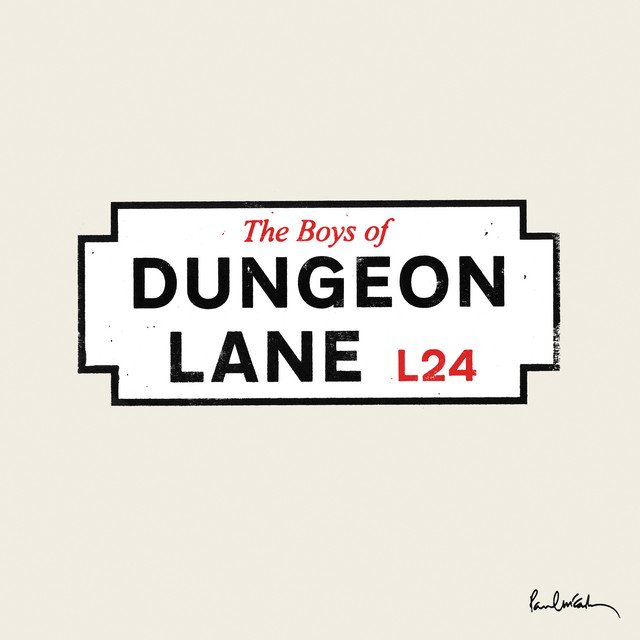
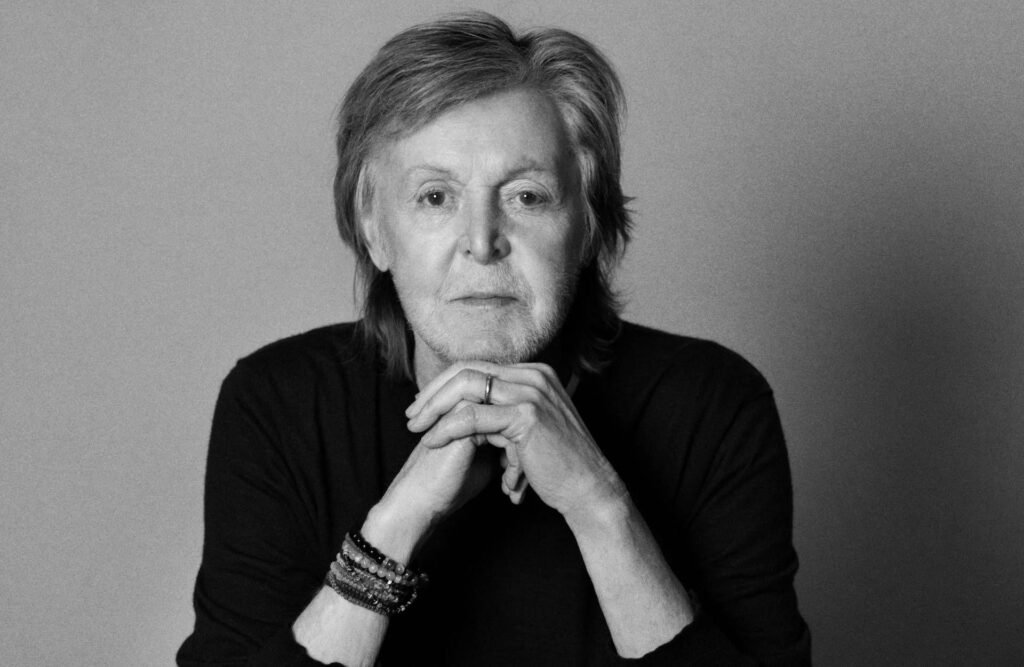
“The Boys of Dungeon Lane ” — a new solo studio album by Paul McCartney, released on May 29, 2026 on MPL/Capitol Records. This is his first solo album since “McCartney III ” (2020), and the release itself has become one of McCartney’s most personal projects in recent years. The record features 14 tracks in which the musician looks back at his childhood in Liverpool, his parents, the early years of his friendship with John Lennon and George Harrison, while continuing to write new love and life songs.
Creation History
The special feature of the album is that its material was formed over approximately five years. McCartney began working on the record with producer Andrew Watt after their first meeting. During that meeting, Paul was playing guitar and accidentally came up with a three-chord progression that, according to him, even he didn’t recognize as something familiar. It was from this sequence that the opening track “As You Lie There” grew.
Recording took place irregularly — between concerts and McCartney’s other affairs. The musicians worked in Los Angeles and Sussex, and the absence of a strict deadline allowed them to return to the songs and gradually shape the record.
Interestingly, in many moments, McCartney worked again on the principle of his early solo albums: he performed a significant portion of the instrumental parts himself, while Watt helped with production and arrangements. As a result, modern studio work combined with a very “McCartney-esque” way of creating music.
What the Album Is About
The main theme is memory.
Dungeon Lane is a real street in the Speke area of Liverpool, close to where McCartney spent his childhood. For him, it became a symbolic gateway to the world before the Beatles, when music was still just a dream, and he, Lennon, and Harrison were ordinary teenagers.
McCartney recalls post-war Liverpool, his parents, the working-class environment, walks near the Mersey, early musical adventures, and friendship with the future Beatles. At the same time, he consciously tries to show these years not as a Beatles myth, but as his own memories of a person who did not yet know how important his future would become.
At the same time, this is not a conceptual autobiographical album from start to finish. Alongside songs about the past, there are love tracks, fantasies, and even a fairly psychedelic number about a girl taking mushrooms at Glastonbury.
Key Tracks
- “Days We Left Behind” — the lead single and effectively the emotional center of the album. McCartney recalls Liverpool, Forthlin Road, Dungeon Lane, young John Lennon, and the years that can never be brought back. The song became the basis for the album’s title. Its hallmark is an extraordinarily simple yet effective melody. This is classic McCartney: melancholy without excessive drama, nostalgia that sounds warm rather than tragic.
- “Home to Us” — a historically special composition, as it is the first official duet between Paul McCartney and Ringo Starr. The song is dedicated to their shared Liverpool and the past they experienced together. NME called this moment one of the most symbolic on the album.
- “Down South” — a memory of travels and friendship with George Harrison. Unlike the grand Beatles mythology, McCartney shows a very simple, human moment of their youth. It is precisely this everyday simplicity that makes the song especially warm.
- “We Two” — one of the most thoughtful compositions. The recording used vintage equipment associated with the Beatles, including the four-track Studer used during the creation of “A Day in the Life”. This creates a kind of bridge between the modern McCartney and his past.
- “Mountain Top” — proof that the album is not purely nostalgia. It is a psychedelic, somewhat whimsical story about a girl at Glastonbury. Here McCartney uses harpsichord, vocal effects, and editing techniques reminiscent of the Beatles’ psychedelic period.
- “Salesman Saint” — a song about the financial difficulties of McCartney’s parents. The composition gradually transitions into a sound reminiscent of 1940s pop music. This is one of the best examples of how Paul uses musical style to recreate the atmosphere of the past.
- “As You Lie There” — the opening track, from which work on the entire album effectively began. It is a love song about falling in love, fantasy, and the desire to be present in someone else’s thoughts.
- “Come Inside” — one of the most rock-oriented tracks. Here McCartney demonstrates the more energetic side of the record, although this particular track received a cooler review from The Guardian.
- “Momma Gets By” — the final track and one of the most orchestral moments of the album. The song returns the listener to the theme of family and McCartney’s mother, ending the record on a warm, almost cinematic note.
Sound
Musically, “The Boys of Dungeon Lane ” is essentially a small encyclopedia of Paul McCartney’s styles.
Here you can hear:
- acoustic folk rock;
- melodic pop rock;
- “Beatles”-style harmonies;
- “Wings”-style rock;
- baroque pop;
- psychedelia;
- orchestral pop;
- swing;
- soft singer-songwriter.
McCartney himself does not try to imitate a specific period of his career. Rather, he gathers different elements of his own musical language into one album. NME particularly noted that the record transitions from acoustic balladry to arena rock and orchestral pop, remaining recognizable thanks to the melodies.
Vocal Characteristics
One of the most interesting features of the album is McCartney’s voice at age 83.
It no longer sounds as it did with the Beatles or Wings. The vocal has become thinner and noticeably more fragile in places. But this works to the material’s advantage: the listener literally hears the age of a person recalling events from 60–70 years ago.
The Guardian notes that this age vulnerability is not a drawback here — on the contrary, it makes the songs about the past significantly more convincing.
Critical and Audience Reception
Professional reaction to ” The Boys of Dungeon Lane ” is generally very positive.
The Guardian rated the album 4/5, noting in particular that at 83, McCartney still demonstrates an exceptional sense of melody. The publication considers the record more focused and meaningful than much of his late work.
NME also gave it 4/5 and emphasized not only the nostalgia, but also the musical diversity. The reviewer responded especially positively to “Days We Left Behind”, “Home to Us”, and McCartney’s ability to continue experimenting even after decades of a career.
Pitchfork is more reserved. The publication describes the album as a professionally made, very warm, and nostalgic work, but considers it somewhat safer and less ambitious than McCartney’s strongest albums. At the same time, the author acknowledges the strength of the melodies and the quality of the arrangements.
The general critical consensus can be formulated as follows: this is not a new “Band on the Run”, but an extremely worthy late album by a great songwriter, who is not trying to compete with his past.
The record was met especially warmly by fans. Even before the release, about 50 fans had the opportunity to listen to the album with McCartney at Abbey Road Studio 2, and after its release, the official website noted active discussions of lyrics, videos, and memes around the record.
Commercially, the result was also very strong: the album debuted at No. 1 on the UK Albums Chart, becoming the 24th British No. 1 album in McCartney’s career. In July 2026, it was also shortlisted for the Mercury Prize 2026 — the first time a solo album by McCartney has received such recognition.
What Was Liked
Most frequently highlighted positives:
- extremely strong melodies;
- sincerity and personal nature of the lyrics;
- nostalgic Liverpool atmosphere;
- combination of different periods of McCartney’s work;
- “Days We Left Behind”;
- historic duet with Ringo Starr;
- vocal vulnerability of the elderly McCartney;
- high-quality analog character of the production.
What Might Not Be Liked
The main drawback is excessive safety.
If the listener expects experiments on the level of “McCartney II ” or at least unexpected moves of “McCartney III ” from McCartney, “The Boys of Dungeon Lane ” may seem too comfortable.
Several tracks — including “Come Inside”, “First Star of the Night”, and “Lost Horizon” — are considered less convincing by critics.
Also, part of the criticism concerns the concept itself: McCartney has already returned to Liverpool, the Beatles, and childhood many times, so for a listener familiar with his discography, some themes may feel familiar.
Overall Summary
“The Boys of Dungeon Lane ” is not Paul McCartney’s attempt to create another “Abbey Road ” or “Band on the Run “. It is a much more intimate and human album, in which a world music legend finally allows himself to speak not about the Beatles as a historical phenomenon, but about Paul before the Beatles.
Its main strength is the combination of immense musical skill with a sense of transience. The voice is no longer as strong as it once was, but that is precisely why the memories of Liverpool, parents, Lennon, and Harrison sound especially convincing.
It is an album about how the past cannot be brought back, but it can be turned into music. And McCartney remains, above all, an outstanding melodist.
Who might like it: fans of The Beatles, Wings, and McCartney’s solo work, as well as lovers of classic rock/pop, folk rock, baroque pop, and singer-songwriter music. It is especially worth a listen for those who appreciate nostalgic lyrics, warm melodies, stories about childhood, and music with a sense of true life perspective.




![ONE OK ROCK – C.U.R.I.O.S.I.T.Y. [DETOX JAPAN TOUR 2025 AT NISSAN STADIUM]](https://asauldm.com/wp-content/uploads/2026/08/one-ok-rock-c-u-r-i-o-s-i-t-y-detox-japan-tour-2025-at-nissan-stadium-150x150.jpg)