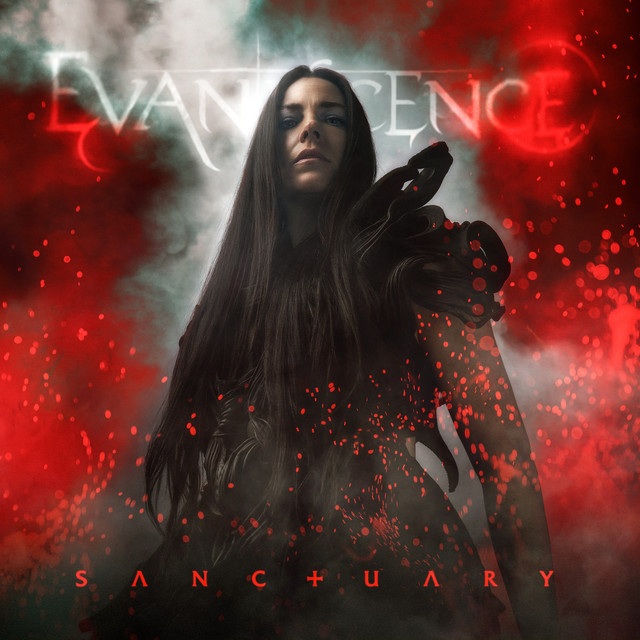
“Sanctuary” is the sixth studio album by American rock band Evanescence, released on June 5, 2026, through BMG and Columbia Records. It is the band’s first full-length studio album in five years, following “The Bitter Truth” (2021). The record blends Evanescence’s signature symphonic heaviness with more contemporary electronic and alternative influences. Much of this evolution can be attributed to the involvement of Jordan Fish, renowned for his work on some of Bring Me The Horizon’s most successful releases, who joined the production team alongside Nick Raskulinecz, producer of the band’s previous album.
The title “Sanctuary” reflects the album’s central theme of finding refuge amid chaos. According to frontwoman Amy Lee, the concept emerged during the band’s Australian tour:
“The world is becoming increasingly chaotic, and this album is our shared sanctuary. Through the power of music, we find comfort, safety, and a profound sense of connection. ‘Sanctuary’ is a place where we can shelter from both internal and external storms in order to be reborn.”
This is also the first Evanescence studio album featuring bassist Emma Anzai, known for her work with Sick Puppies. Although she joined the band in 2022, “Sanctuary” marks her first full studio contribution, showcasing her distinctive playing style and songwriting input on several tracks, including the title song.
A significant part of the album’s fresh and aggressive sound stems from Jordan Fish’s influence. His production approach introduces a greater emphasis on electronic textures and industrial energy, particularly evident on tracks such as “Tell Me When You’ve Had Enough” and “Rapture.”
The album’s lead single, “Afterlife,” was released well before the album itself, arriving on March 28, 2025. The song served as the official soundtrack for Netflix’s adult animated series Devil May Cry. It became a major success and even reached No. 1 on the Billboard Rock & Alternative Airplay chart.
Despite its modern production, both critics and longtime fans noted that the album’s mystical atmosphere and the structure of many songs pay tribute to Evanescence’s earliest creative period—the demos and independent releases from the late 1990s and early 2000s that preceded the breakthrough album “Fallen.”
In an interview with Kerrang!, Amy Lee explained that much of the album’s lyrical content revolves around the search for humanity and authenticity amid an overwhelming “stream of lies and misinformation.” The record emerged as a response to global challenges, tyranny, and human rights violations, ultimately becoming a manifesto of inner resistance, resilience, and hope.