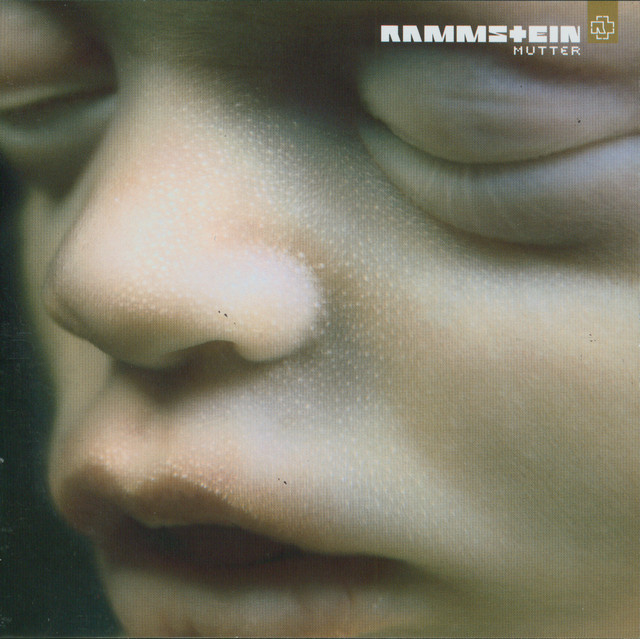
In April 2001, German band Rammstein released their third studio album, Mutter, via Motor Music. Produced once again by longtime collaborator Jacob Hellner, the record became the band’s definitive breakthrough. Blending crushing guitar riffs, danceable rhythms, orchestral arrangements, and a deeply provocative aesthetic, Mutter propelled the Neue Deutsche Härte genre onto the global stage.
The album’s singles quickly became classics of alternative heavy music. “Sonne,” originally written as an entrance theme for boxer Vitali Klitschko, combines monumental heaviness with striking operatic vocals in the chorus. “Links 2-3-4” served as the band’s direct political and ideological response to accusations of far-right sympathies, using its militaristic rhythm and lyrics to declare that “the heart beats on the left.”
The haunting title ballad “Mutter” stands out for its emotional intensity, telling the story of a child born through an experiment who has no mother and longs for revenge. Meanwhile, energetic anthems such as “Ich will” and the explosive “Feuer frei!”—which later became the signature track of the Hollywood action film xXx—perfectly captured the band’s trademark blend of media satire, industrial power, and an unmistakable fascination with pyrotechnics.
The album’s visual concept became a work of art in its own right. The cover features the preserved body of a deceased infant suspended in formaldehyde. The controversial photograph was created by renowned German photography duo Daniel & Geo Fuchs as part of their Conserving art project, which documented specimens in morgues and anatomical museums.
Far from being mere provocation, the image directly reflects the album’s central themes: artificial life, the absence of maternal warmth, isolation, and the fragile boundary between birth and death. Throughout the album booklet, the band members themselves are also depicted submerged in preservation fluid, appearing like experimental subjects trapped inside a laboratory.
The recording sessions proved to be the most difficult period in Rammstein’s history, bringing the band closer to breaking up than ever before or since. The members rented the historic Villa Weimar on Germany’s Baltic Sea coast, where they built a temporary recording studio. Exhaustion and creative disagreements led to fierce arguments over virtually every musical idea and lyrical detail.
As keyboardist Christian “Flake” Lorenz later recalled:
“We came closer to breaking up during the making of Mutter than at any other point before or since. Everyone was pulling in a different direction, and we needed months apart just to learn how to talk to each other again.”
Guitarist Paul Landers, however, believed that this internal struggle ultimately produced the band’s finest work:
“This album represents our absolute peak as a single organism. We poured all of our anger, darkness, and passion into it, creating something far greater than just a collection of guitar riffs.”
Across music communities and online forums—including Reddit—fans consistently regard Mutter as Rammstein’s magnum opus. Listeners frequently praise its flawless balance between aggressive industrial metal and symphonic melody, as well as its remarkable consistency, with virtually no weak tracks from beginning to end.
Mutter is a monumental work that ultimately defined Rammstein’s artistic identity and captured the band at the height of its creative powers. It masterfully combines massive industrial metal with poetic lyricism, dark visual aesthetics, and philosophical reflections on human nature. More than two decades later, it remains one of the defining masterpieces of early twenty-first-century heavy music, sounding every bit as powerful, relevant, and timeless as when it was first released.
The album is an essential listen for fans of heavy and industrial music, listeners who appreciate ambitious concept albums with striking visual presentation, and anyone who values exceptional production that seamlessly fuses raw aggression with cinematic, symphonic grandeur.




![ONE OK ROCK – C.U.R.I.O.S.I.T.Y. [DETOX JAPAN TOUR 2025 AT NISSAN STADIUM]](https://asauldm.com/wp-content/uploads/2026/08/one-ok-rock-c-u-r-i-o-s-i-t-y-detox-japan-tour-2025-at-nissan-stadium-150x150.jpg)