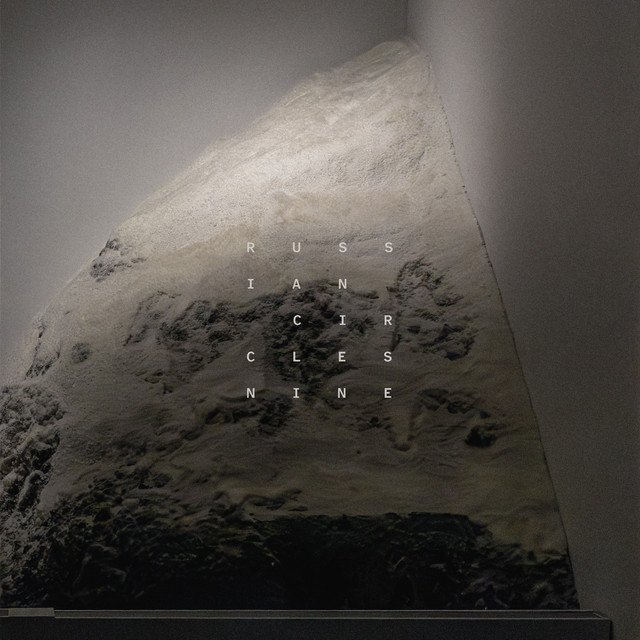
“Nine” — the ninth studio album by American instrumental post-metal band Russian Circles, released on August 28, 2026, via Sargent House. The record follows “Gnosis” (2022) and retains the band’s defining characteristic — creating massive, heavy, and emotionally charged music without vocals.
The album contains seven instrumental compositions with a total running time of approximately 39 minutes. The Russian Circles lineup remains guitarist Mike Sullivan, bassist Brian Cook, and drummer Dave Turncrantz.
Sound and Genres
The foundation of “Nine” remains Russian Circles’ signature instrumental post-metal, but this time the band shifts the focus even further toward heaviness, a dark atmosphere, and a dense low-end sound.
Kerrang! called “Nine” the heaviest Russian Circles album to date while also describing it as one of the band’s most straightforward releases. The publication notes that the musicians have not abandoned their gradual approach to developing compositions, but the climaxes are particularly powerful this time around.
Distorted Sound Magazine draws attention to the album’s expansive soundscapes and Russian Circles’ ability to continually find new ways of expanding their sonic palette.
Creation and Recording
During the making of “Nine”, Russian Circles once again collaborated with Kurt Ballou — guitarist of Converge and a producer who previously worked with the band on “Guidance”, “Blood Year”, and “Gnosis”.
The recording took place at Electrical Audio in Chicago, after which the work was completed at GodCity Studio, Ballou’s facility. Thus, “Nine” continues the band’s long-standing creative collaboration with the producer.
The return to Electrical Audio is particularly significant. This was where Russian Circles recorded their debut album “Enter” in 2006. Two decades later, the band returned to the same studio as one of the best-known representatives of instrumental post-metal.
Tracks Overview
- “Borehole” — opens the album with a dark, dissonant atmosphere. The composition gradually builds around a recurring guitar motif, heavy bass, and powerful drums before exploding into one of Russian Circles’ characteristic heavy riffs. Kerrang! notes that the track immediately demonstrates the band’s more straightforward side: the composition still develops gradually, but its climax proves particularly devastating.
- “Empath” — the album’s first single and one of its most aggressive tracks. A siren-like introduction quickly gives way to massive bass, powerful drums, and a heavy guitar riff. Boolin Tunes calls the composition one of the heaviest moments on “Nine”, emphasizing its direct live energy.
- “Eluvial” — the longest composition on the album, running for more than 8 minutes. It begins with electronic textures and gradually develops into a large-scale composition with multilayered guitars. Distorted Sound Magazine compares its atmosphere to the music of a science-fiction film, before the track builds toward a huge sonic climax.
- “E2” — one of the album’s most atmospheric compositions. Electronic textures and deep bass create a cold, almost futuristic atmosphere, while the guitars gradually add weight to the track. Metal Temple draws attention to its dark character and the significant role of the bass part.
- “Meridian” — a track with a more pronounced melodic character. Its guitar lines gradually intertwine with bass and drums, creating a sense of constant movement. Toward the end of the composition, Dave Turncrantz gets an opportunity to showcase his drumming skills.
- “Arletta” — a short acoustic interlude before the finale. Unlike most of the album, soft guitar dominates here, providing a necessary contrast before the final burst of heaviness. Kerrang! describes the composition as a brief moment of calm before the album’s catastrophic conclusion.
- “Seventh Seal” — the closing composition and one of the most powerful pieces on the album. Following the calm of “Arletta”, Russian Circles return to heavy riffs, massive bass, and powerful drums. Boolin Tunes considers the track one of the strongest finales in the band’s discography, while Metal Temple interprets it as the dark conclusion to the album’s entire concept.
Themes and Atmosphere
Since “Nine” is entirely instrumental, it does not have a literal lyrical narrative. Its meaning is conveyed through dynamics, tone, repetition, contrasts, and the gradual buildup of tension.
According to Russian Circles, the album’s music is connected to reconciliation, change, aging, and the physical distance between the band members. The musicians view the creative process itself as a way of reflecting on the passage of time and maintaining their connection with one another.
Nine Circles places particular emphasis on this aspect of the album: despite the members now living in different parts of the United States, Russian Circles continue to work as a single creative organism.
This adds an additional emotional layer to “Nine”. The album can be perceived not simply as a collection of instrumental compositions, but as a kind of snapshot of the band’s state after more than two decades of existence.
Critical and Listener Reception
The professional response to “Nine” has been overwhelmingly positive. Critics particularly praise the album’s heaviness, Kurt Ballou’s production, the trio’s musicianship, and Russian Circles’ ability to remain recognizable without literally repeating their previous records.
Kerrang! gave the album 4/5. The publication calls “Nine” one of the band’s most direct and heaviest albums. “Borehole”, “Empath”, and “Eluvial” are particularly praised, as is the contrast between the acoustic “Arletta” and the closing “Seventh Seal”. (Kerrang!)
Distorted Sound Magazine rated the record 9/10, calling it one of the best examples of Russian Circles developing their expansive instrumental sound. The publication particularly praises the atmosphere of “Eluvial”, the melodic quality of “Meridian”, and the crushing finale of “Seventh Seal”. (Distorted Sound Magazine)
Metal Temple also gave the album 9/10. In the publication’s view, Russian Circles do not need to radically reinvent their style: their strength lies in the gradual refinement of an already established musical language. The review particularly emphasizes the album’s cold, dark atmosphere and the huge role of the bass guitar. (Metal Temple)
Boolin Tunes rated “Nine” 8/10 and called it one of Russian Circles’ heaviest albums of the recent period. The reviewer particularly highlights “Empath”, “Eluvial”, and “Seventh Seal”, as well as the band’s ability to transfer the energy of their live performances into a studio recording. (Boolin Tunes)
Devolution Magazine calls “Nine” an excellent example of mature instrumental post-metal. The publication particularly praises “Eluvial”, which it considers the album’s centerpiece, as well as the band’s ability to tell entire stories without using vocals. (Devolution Magazine)
Wonderbox Metal calls “Nine” an excellent album and notes that every composition has its own character. The publication particularly highlights the atmosphere of “Eluvial”, the electronically tinged stoner character of “E2”, the melody of “Meridian”, and the heaviness of “Seventh Seal”. (Wonderbox Metal)
Thus, the album’s main strength is simultaneously its potential weakness: Russian Circles do not attempt to radically change their formula. For the band’s fans, this means familiarity and consistently high quality, while listeners who expect every new album to introduce a fundamentally new sound may find the record less revolutionary.
At the same time, even critics who point to the lack of radical changes acknowledge that Russian Circles continue to discover new details within their own style — through electronic textures, a heavier sound, melodic elements, and more sophisticated work with dynamics.
Among the band’s fans, “Empath”, “Borehole”, “Eluvial”, and “Seventh Seal” have been particularly well received — compositions in which Russian Circles demonstrate the heaviest side of their sound.
Conclusion
“Nine” is an album by a mature Russian Circles that does not need a radical reboot of its established style.
The record has become heavier, darker, and more focused than many of the band’s previous works. At the same time, it contains enough melody, atmospheric passages, and dynamic contrasts to prevent the music from becoming a continuous wall of sound.
The main strengths of “Nine” are the interplay between guitar, bass, and drums, Kurt Ballou’s powerful production, the carefully constructed drama of the compositions, and the ability of three musicians to create enormous sonic spaces without vocals.
“Empath”, “Eluvial”, and “Seventh Seal” demonstrate the album’s heaviest side, while “Arletta” provides a necessary moment of respite and makes the final climax even more effective.
Russian Circles are not proving that they can play any kind of music. They are proving something else: after more than 20 years of a career, it is possible to remain within your own style while continuing to make it deeper, heavier, and more interesting.
“Nine” is recommended for fans of post-metal, post-rock, sludge metal, and atmospheric instrumental rock, as well as listeners who enjoy music without vocals but do not want to sacrifice drama, emotion, or scale.







![ONE OK ROCK – C.U.R.I.O.S.I.T.Y. [DETOX JAPAN TOUR 2025 AT NISSAN STADIUM]](https://asauldm.com/wp-content/uploads/2026/08/one-ok-rock-c-u-r-i-o-s-i-t-y-detox-japan-tour-2025-at-nissan-stadium-150x150.jpg)