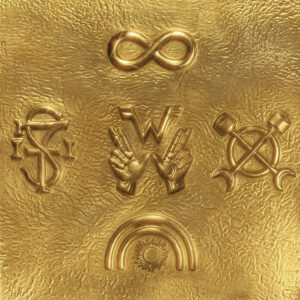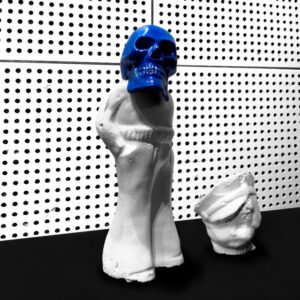
“Frozen Charlotte“ is the seventh solo studio album by Jack White, released on July 10, 2026, via Third Man Records. The record consists of 13 tracks and runs for about 43 minutes.
It serves as a thematic continuation of the previous album, “No Name” (2024): White once again steps away from the complex electronic and art-rock experiments of recent years, returning to raw, guitar-driven blues/garage rock. But while “No Name ” was perceived as a sudden return to his roots, “Frozen Charlotte” sounds like a deliberate consolidation of this new direction.
What Does the Name Frozen Charlotte Mean?
The title stems from the old Anglo-American folk ballad “Fair Charlotte” / “Young Charlotte”, in which a young woman freezes to death after refusing to wrap herself in a blanket during a winter ride.
For White, this name fits the overall atmosphere of the album perfectly — coldness, solitude, alienation, anxiety, and impending doom. However, the album itself is not a literal concept story about Charlotte.
How the Album Was Made
White recorded ” Frozen Charlotte ” with the line-up of musicians that formed around the ” No Name ” tour:
- Patrick Keeler — drums;
- Dominic Davis — bass;
- Bobby Emmett — keyboards.
This is a crucial detail, as White had the opportunity to translate the tight dynamics of a well-rehearsed live band into a studio recording. Unlike many of his solo works featuring overly complex arrangements, this project leans into an almost live-performance approach. Tape Op describes the LP as a tight band playing practically live, packed with heavy riffs, groove, and plenty of guitar solos.
White himself served as the producer, while recording and mixing were handled alongside long-time engineer Bill Skibbe. The album was recorded at Third Man Studio in Nashville.
Interestingly, Olivia Jean, White’s wife at the time, also took part in recording some of the material. This takes on added significance given that she filed for divorce shortly before the album’s release. Variety notes that many lyrics on ” Frozen Charlotte ” revolve around conflict, detachment, and broken relationships, though White himself did not explicitly frame the album as autobiographical. (Variety Australia)
Sound and Style
In short, ” Frozen Charlotte ” is Jack White in “guitar-forward” mode.
There is virtually none of the experimental electronics heard on ” Boarding House Reach ” or ” Fear of the Dawn “. Instead, White returns to:
- dirty garage-rock;
- blues riffs;
- heavy classic rock;
- psychedelic guitar;
- punk attitude;
- 1970s hard rock;
- Hammond organ;
- short, explosive guitar solos.
The sound is heavily influenced by Led Zeppelin, The Stooges, The Who, Black Sabbath, ZZ Top, Fleetwood Mac, Thin Lizzy, and other 1960s–70s classics.
Yet White doesn’t just replicate vintage rock. His guitar sounds intentionally harsh, overdrive-laden, and nervous, while his vocals often verge on a sermon-like shout.
Standout Songs
- “G.O.D. And The Broken Ribs”: The opening track and one of the central numbers on the album. White kicks off the record with a grand biblical metaphor — the Garden of Eden, God, the end of the world, and human isolation. Musically, it is a dense blues-hard-rock track with several brief solo spots. Notably, in the middle of the song, other band members get their chance to shine alongside White. This track perfectly illustrates the album’s core principle: minimal fluff, maximum guitar energy.
- “Derecho Demonico”: One of the album’s finest tracks and a highlight specifically singled out by Variety. White uses the imagery of a destructive tornado as a metaphor for his own power and chaos. The synergy between the guitar and Hammond organ works exceptionally well here, with a solo that sounds deliberately psychedelic.
- “There’s Nobody There”: A darker track about emptiness and solitude. The title essentially captures one of the album’s central themes.
- “Raising The Grain”: One of the most straightforward garage/blues-rock tracks. This is a case where White keeps things simple, letting the main riff drive the entire song.
- “You’ll Never Fix Me”: One of the most intriguing tracks in light of the album’s personal context. The lyrics center around a broken relationship, misunderstanding, and a final split. The phrase “you’ll never fix me” sounds like a refusal to let someone else fix or save the narrator. Variety points out the obvious parallel between this song and White’s personal circumstances, though without claiming the track is directly about the divorce.
- “Nobody Knows”: One of the most philosophical tracks. White reflects on the impossibility of getting definitive answers about life, God, and existence. Intriguingly, he turns the guitar solo itself into a musical answer to the song’s questions. Variety interprets this moment as almost a musical depiction of agnosticism.
- “Dollar Bill”: Dirty, swampy blues-rock delivered with White’s trademark aggression. In the lyrics, money becomes part of a story about betrayal, greed, and ruined relationships.
- “I Can’t Believe What I’m Hearing”: One of the most punk moments on the record. White attacks modern culture’s constant noise, arguments, and endless feed of information. Lines like “click clack, back track, tick tock, smack talk” turn into a rhythmic punk-rap. NME considers this track a prime example of White blending humor with social aggression.
- “Thick As Thieves”: A more traditional classic-rock number. It highlights White’s strength as a guitarist, though some critics find tracks like this slightly less memorable.
- “All Alone Again”: The title speaks for itself. It’s another track about loneliness and alienation, presented through his signature blend of blues and garage rock.
- “She’s In A Frenzy”: One of the shortest and highest-energy tracks — running just around 2:23. It is practically a pure hit of live adrenaline.
- “Making Contact”: White targets modern social media culture and people who constantly “create content for content’s sake”. The track stands out with sharp satire and a highly infectious riff.
- “Neighbors Blues”: The longest track on the album — running over 5 minutes — and one of the most unusual. Unlike many of the album’s brief rock’n’roll outbursts, White allows tension to build up gradually here. The Guardian named it one of the most effective moments on the album precisely due to this dynamic.
Critical Reception
Overall reaction to ” Frozen Charlotte ” has been very positive. On Metacritic, the album scored 84/100, with 15 out of 16 professional reviews being positive. (Metacritic)
- Variety — 91/100. The publication effectively calls ” Frozen Charlotte ” the sequel to ” No Name ” that many fans were waiting for. They particularly praise the guitar work, short and hyper-dense tracks, and White’s sheer aggressiveness. (Variety Australia)
- NME — 3.5/5. The reviewer praises the classic rock approach and predicts these songs will excel live on stage, but notes that the album lacks the variety of ” No Name “. (NME)
- The Guardian takes a slightly more critical stance: calling the album fun, hard-hitting, and a welcome return to roots, but noting that after several tracks, the repetitive nature of the riffs and arrangements begins to show. (The Guardian)
- Pitchfork also sees White at top technical strength — guitar parts remain the main attraction, describing the music as a sort of “night-terror boogie”. (Pitchfork)
What Listeners Loved
The most praised aspects include:
- Jack White’s guitar craftsmanship;
- raw analog/vintage sound;
- short, high-energy compositions;
- return to garage-blues;
- live concert energy;
- lack of over-polished studio production;
- dark humor;
- blend of blues with heavy classic rock;
- the feeling of a continuation of the “No Name” era.
For many fans, it was particularly refreshing that after White’s experimental solo work, he once again sounds as though The White Stripes received a heavier, full-band lineup.
What Might Turn People Off
The main complaint is monotony.
While ” No Name ” impressed with concise energy and variety, ” Frozen Charlotte ” frequently reuses the same formula across its 13 tracks: riff → vocals → guitar burst → next riff.
The Guardian directly notes that towards the middle of the album, several songs start blending together.
Another issue is that White makes no attempt to reinvent the wheel. For fans of his garage/blues era, this is a plus, but listeners expecting another ” Boarding House Reach ” might find the album overly conservative.
Overall Summary
” Frozen Charlotte ” is Jack White refusing to reinvent himself. Following the experimental ” Boarding House Reach ” and ” Fear of the Dawn “, and his sudden return to garage rock on ” No Name “, White firmly settles into his strongest comfort zone: dirty blues, heavy guitars, punk attitude, and classic rock’n’roll.
If ” No Name ” was a dramatic return to roots, then ” Frozen Charlotte ” is its heavier, darker sequel. There is more anger, loneliness, and internal tension here. Even when White sings about God, neighbors, money, or social media, it all turns into fuel for his guitar.
At the same time, it isn’t the most varied album of his career. It works brilliantly as a powerful rock record, though not always as a multifaceted album. That is why it’s best approached not as an attempt to surprise the listener, but as solid proof that his classic blues-garage formula still works.
Who will enjoy it: Fans of The White Stripes, The Raconteurs, The Stooges, Led Zeppelin, Black Sabbath, The Kills, Queens of the Stone Age, and garage/blues rock in general. Especially worth a listen for those who love raw guitar sounds, explosive short tracks, heavy riffs, psychedelic solos, and unpolished rock.




![ONE OK ROCK – C.U.R.I.O.S.I.T.Y. [DETOX JAPAN TOUR 2025 AT NISSAN STADIUM]](https://asauldm.com/wp-content/uploads/2026/08/one-ok-rock-c-u-r-i-o-s-i-t-y-detox-japan-tour-2025-at-nissan-stadium-150x150.jpg)